
How Should I Plan a Bathroom Makeover Budget?
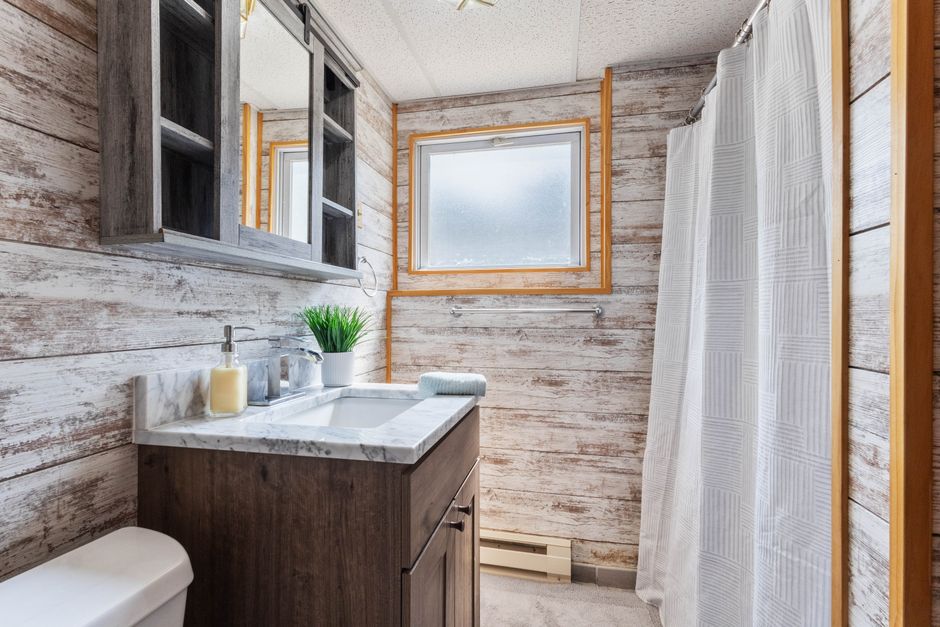
Plan a bathroom makeover by keeping the layout when fixtures, wiring, plumbing, and ventilation still work; spend first on paint, hardware, lighting, and water-efficient replacements; then phase surface upgrades; and reserve a full renovation for moved pipes, new wiring, walls, or shower changes. Use recent remodel spending as a scope check, not a price promise, and keep a separate decision reserve for concealed damage.
The useful split is simple: cosmetics change what you see; systems and layout change what the room needs to do. Confuse the two and a modest refresh becomes a demolition project halfway through. Separate them first. Then spend in phases.
What is the cheapest way to make an outdated bathroom look better?
The cheapest route is usually a same-location cosmetic refresh: paint, trim, cabinet hardware, countertops or floor finishes, and replacement fixtures that stay where they are. The City of Milwaukie lists painting, cabinets, countertops, floor finishes, and same-location sink or toilet replacement among work that can be completed without a permit under its local guide. Local rules differ, so use that distinction as a planning tool and confirm the requirements where you live.
Run a keep-versus-replace audit before choosing a color. Keep a fixture when it works, remains in place, and does not force plumbing or electrical changes. Replace it when it creates a function problem, wastes water, or prevents a necessary repair. This is not glamorous work. It is the work that stops a paint-and-hardware budget from acquiring pipe-moving costs.
| Makeover path | What stays stable | What changes | Budget reference |
|---|---|---|---|
| Paint-and-hardware refresh | Layout, plumbing locations, wiring | Paint, trim, hardware, selected same-location fixtures | No published all-in median in the provided sources |
| Surface update | Shower area and basic layout | Finishes, vanity, countertop, flooring, selected tile | Houzz reported a $6,000 median for minor remodels in bathrooms under 100 square feet in 2023 |
| Full renovation | Only what inspection and scope allow | Potential layout, plumbing, electrical, mechanical, and structural work | Houzz reported a $15,000 median spend across bathroom remodels in 2023 |
Use water efficiency as a functional upgrade, not decoration. The U.S. Environmental Protection Agency's WaterSense program says toilets account for nearly 30% of average household indoor water use; older models can use as much as 6 gallons per flush, while WaterSense-labeled toilets use 1.28 gallons per flush or less. WaterSense products are certified for performance as well as efficiency, so a same-location replacement can improve daily operation without changing the room's plumbing plan.
Make the decision in this order: “Can this stay in place?” then “Does it work well?” then “Does it support the finished look?” Starting with the third question is how small bathrooms get expensive.
Should I replace the vanity before choosing tile and paint?
Yes. Choose the vanity, its storage needs, and its position before finalizing tile and paint, because it is the room's largest functional furniture decision and anchors the finish choices around it.
Start with the work surface and storage problem. A vanity that fits the room but fails to hold everyday items simply moves clutter onto the counter. Decide whether the existing vanity can be refinished or whether a replacement can fit without moving shutoff valves. Prince William County's guidance identifies installing a vanity without moving shutoff valves as work that does not require a permit there; moving the underlying plumbing is a different category.
Then build the finish stack: vanity first, countertop second, tile third, paint last. The weak sequence is “pick a dramatic tile, then force every other decision to match.” The stronger sequence is “solve storage and proportion, then select finishes that carry the same visual direction.” This reduces rework and makes samples easier to compare in the actual room.
Tile deserves a deliberate decision because it is widely used in shower updates. Houzz's 2024 U.S. Bathroom Trends Study, based on 1,247 homeowners with recent, current, or planned renovations, reported tile selection by 87% of homeowners upgrading shower floors and 83% upgrading shower walls. That popularity is not a reason to tile everything. It is a reason to decide where tile adds durability or visual focus before buying it.
Do not leave ventilation out of the audit. The U.S. Department of Energy explains that excessive moisture can contribute to mold growth, ruined insulation, structural damage, and higher cooling costs; bathroom exhaust fans are a common form of spot ventilation. A fresh vanity and new tile cannot compensate for moisture that has nowhere to go.
Which bathroom changes require a plumber or permit?
Changes that move or extend plumbing, alter electrical systems, add wiring, move fixtures, or add exhaust work commonly require permits and professional coordination; same-location cosmetic replacements often do not, but local rules control.
Use this line to classify every proposed task: “Does this change a pipe, wire, wall, or vent path?” If the answer is no, it is likely a cosmetic candidate. If the answer is yes, stop treating it as a finish choice and check with the local building authority before scheduling work.
For example, the Prince William County Department of Development Services states that modifying or extending an existing plumbing or electrical system requires a permit. Its guidance also distinguishes a same-location toilet or faucet replacement from a tub or shower basin replacement that changes location, piping, or valves. Milwaukie's guide similarly lists new or moved fixtures, new or moved pipe, new wiring, new exhaust fans, walls, and structural work as permit-triggering categories.
Ventilation has two jobs: remove moisture and protect the work you just paid for. Prince William County specifies direct outdoor exhaust and sets capacity requirements when the required operable window is absent. Treat an inadequate fan as a system decision, not a cosmetic add-on.
Build a phased budget without fooling yourself
Give each dollar one job. Do not use a single vague “bathroom budget” for paint, tile, permits, and unknown repairs. That makes an overrun invisible until the finish choices are already ordered.
- Phase one: verify the room. Audit fixture locations, shutoff valves, electrical changes, the shower or tub, and ventilation. Mark every item as keep, replace in place, or move.
- Phase two: fund the visible refresh. Price paint, hardware, lighting replacements without new wiring, and selected same-location fixtures. This is the work most likely to preserve the existing layout.
- Phase three: price surface choices. Select the vanity, countertop, floor finish, and tile only after the functional scope is settled.
- Phase four: hold a decision reserve. Public data in the provided sources does not provide a universal contingency percentage. Keep this reserve separate for concealed moisture or subfloor-related repair decisions rather than silently spending it on upgraded finishes.
Use the Houzz medians as a scope alarm. The study reported that median spending on minor remodels that keep the shower area as is rose from $8,000 to $8,500, while the overall median reached $15,000 in 2023. Those figures are not quotes for your home. They are a clear signal that a project described as “minor” still needs disciplined scope control.
Your homework: write every proposed change on one line and label it “cosmetic,” “same-location replacement,” or “system/layout.” If an item belongs in the last category, get the permit and trade question answered before choosing the tile around it.
Frequently Asked Questions
Can I keep the existing layout and still make the bathroom look high-end?
Yes. Keeping the layout can still produce a polished result when the room receives a coordinated surface, lighting, storage, and fixture update. Tile is a common choice for shower upgrades: Houzz reported that 87% of renovating homeowners who upgraded shower floors selected tile, and 83% chose it for shower walls. The key is to make functional decisions first, then use finishes to create a deliberate visual system.
What should I do first in a bathroom makeover?
Start with a keep-versus-replace audit of the toilet, vanity, shower or tub, plumbing locations, electrical work, and exhaust ventilation. That audit separates cosmetic work from changes that can trigger permits or require professional work. Then set the work sequence before ordering finishes: layout and system decisions first, finished surfaces last.
How much should I set aside for unexpected bathroom renovation costs?
The provided public sources do not set a universal percentage or dollar amount for unexpected bathroom repairs. Set aside a separate decision reserve rather than treating it as tile, paint, or fixture money, because excess moisture can be associated with mold growth, ruined insulation, and structural damage, according to the U.S. Department of Energy. If concealed damage appears, pause the cosmetic phase and price the repair before continuing.
Sources
- U.S. Environmental Protection Agency WaterSense: Residential Toilets
- Prince William County Department of Development Services: Guidelines for Adding or Remodeling a Residential Bathroom
- City of Milwaukie Building Division: Home Improvement Guide - Bathroom Remodel
- Houzz: 2024 U.S. Bathroom Trends Study
- U.S. Department of Energy: Home Ventilation